Mgf of a Normal Distribution Theory

- 1.
What in the Blazes Is an MGF Anyway?
- 2.
Why Should We Care About the MGF of a Normal Distribution?
- 3.
What’s the Actual Formula for the MGF?
- 4.
How Does the MGF Help Us Find Moments?
- 5.
Visualising the MGF: More Than Just Symbols
- 6.
Does Every Distribution Have an MGF?
- 7.
MGF vs. Characteristic Function: What’s the Diff?
- 8.
Real-World Applications: Where MGFs Shine
- 9.
Common Pitfalls When Using MGFs
- 10.
Why the MGF of a Normal Distribution Is a Statistical Superpower
Table of Contents
mgf of a normal distribution
What in the Blazes Is an MGF Anyway?
Ever heard someone say “MGF” and thought they were talking about a new boy band or a fancy espresso machine? You’re not far off—well, maybe you are. In stats lingo, MGF stands for **Moment Generating Function**, and no, it doesn’t generate moments like a TikTok dance trend. Instead, the mgf of a normal distribution is a nifty mathematical tool that—like a well-brewed cuppa—packs all the essential info about a probability distribution into one neat little formula. If you know the MGF, you can extract *all* the moments (mean, variance, skewness, etc.) just by taking derivatives. It’s like having a Swiss Army knife for distributions—compact, clever, and surprisingly powerful.
Why Should We Care About the MGF of a Normal Distribution?
Here’s the thing: the normal distribution is the Beyoncé of probability—it’s everywhere, beloved, and sets the standard. And the mgf of a normal distribution is its backstage pass. Why? Because it uniquely identifies the distribution (under mild conditions), simplifies proofs, and makes working with sums of independent random variables a breeze. Fancy adding two independent normals? Their MGFs multiply—and boom, you get another normal. No messy convolutions needed. The mgf of a normal distribution isn’t just elegant; it’s practical. Like wearing wellies to a music festival—it might not be glamorous, but it’ll save your socks.
What’s the Actual Formula for the MGF?
Right, let’s get down to brass tacks. For a random variable \( X \sim \mathcal{N}(\mu, \sigma^2) \), the mgf of a normal distribution is:
\( M_X(t) = \exp\left(\mu t + \frac{1}{2} \sigma^2 t^2\right) \)
That’s it! Clean, exponential, and gloriously smooth. The beauty? Plug in \( t = 0 \), and you get 1 (as any proper MGF should). Take the first derivative at \( t = 0 \), and—hey presto—you’ve got the mean \( \mu \). Second derivative? Variance \( \sigma^2 \) pops out. It’s like magic, but with more calculus and fewer rabbits. This formula is the backbone of why the mgf of a normal distribution is so revered in theoretical stats.
How Does the MGF Help Us Find Moments?
Remember those tedious integrals to find \( E[X^k] \)? The mgf of a normal distribution lets us skip them entirely. The k-th moment is simply the k-th derivative of \( M_X(t) \) evaluated at \( t = 0 \). So for the normal distribution:
- First moment (mean): \( M'_X(0) = \mu \)
- Second moment: \( M''_X(0) = \mu^2 + \sigma^2 \)
- Variance: \( M''_X(0) - [M'_X(0)]^2 = \sigma^2 \)
This method works for *any* distribution with a valid MGF—but the mgf of a normal distribution is especially cooperative because it exists for all real \( t \), unlike some temperamental distributions that only behave near zero. Cheers to reliability!
Visualising the MGF: More Than Just Symbols
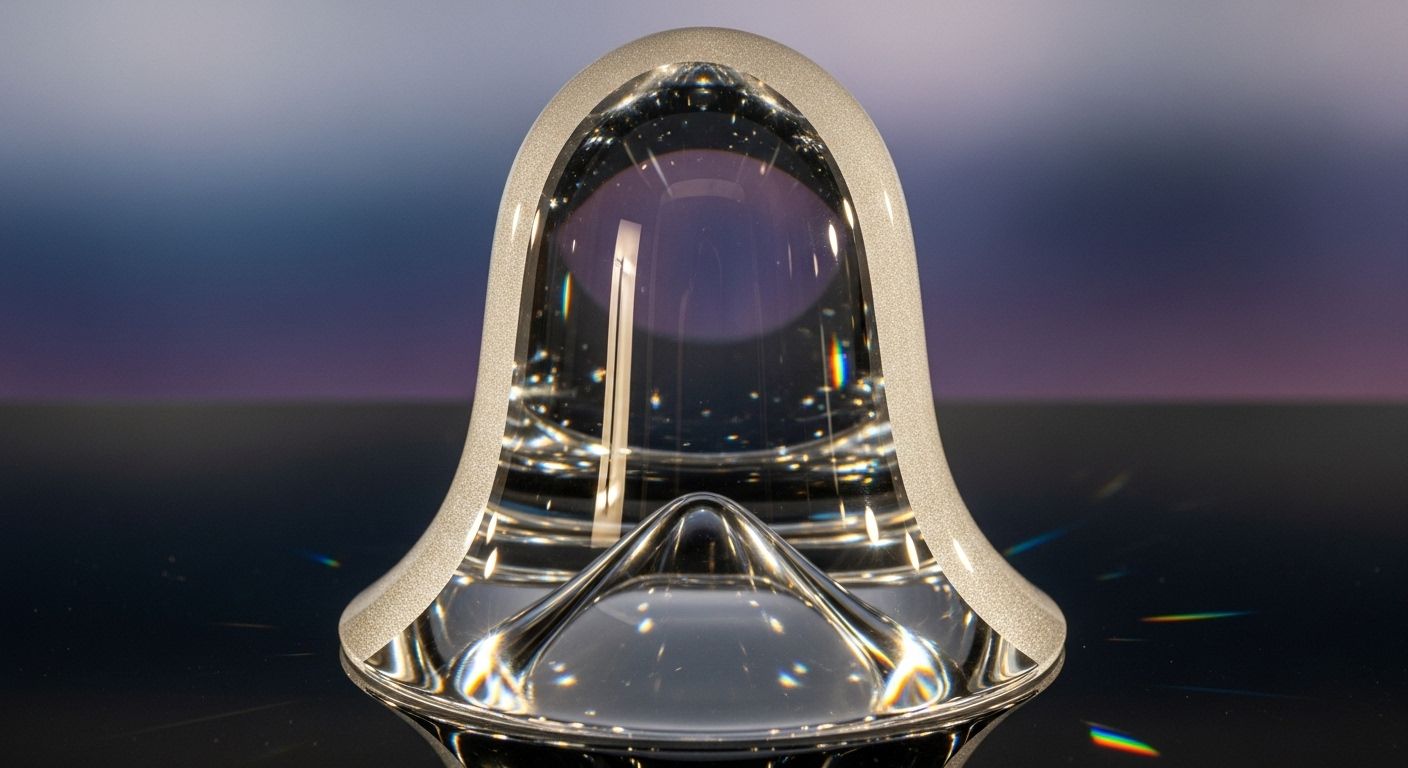
It’s easy to get lost in equations, so let’s picture this. The mgf of a normal distribution is a smooth, upward-curving exponential function centred around \( t = 0 \). Its shape encodes how “spread out” the original distribution is: larger \( \sigma^2 \) makes the MGF curve steeper. Think of it as the distribution’s fingerprint—unique, informative, and mathematically photogenic.
Does Every Distribution Have an MGF?
Ah, here’s the rub—not all distributions play nice. The Cauchy distribution, for instance, throws a tantrum and refuses to have an MGF (its integral diverges). But the normal? Oh, it’s a model citizen. The mgf of a normal distribution exists for *all* real values of \( t \), which is rare and rather marvellous. This global existence is why we lean on it so heavily in proofs and limit theorems. It’s the dependable friend who always answers your call—even at 3 a.m. during exam season.
MGF vs. Characteristic Function: What’s the Diff?
Now, don’t get your knickers in a twist—there’s also something called the characteristic function (CF), which uses \( e^{itX} \) instead of \( e^{tX} \). The key difference? The CF *always* exists, even when the MGF doesn’t. But the mgf of a normal distribution is so well-behaved that both exist and are closely related: \( \phi_X(t) = M_X(it) \). In practice, if you’ve got an MGF, it’s often easier to work with—real numbers beat complex ones any day. Unless you’re into quantum physics, of course. Then, carry on.
Real-World Applications: Where MGFs Shine
You might think the mgf of a normal distribution is just academic fluff—but it’s quietly powering real decisions. In finance, risk models use MGFs to assess portfolio variance. In engineering, signal noise (often modelled as normal) is analysed via MGFs to predict system reliability. Even in quality control, if widget diameters follow a normal distribution, the MGF helps compute tolerance probabilities without numerical integration. It’s the unsung hero behind the scenes—like the stagehand who ensures the spotlight hits just right.
Common Pitfalls When Using MGFs
Let’s not pretend it’s all roses. A classic mistake? Assuming the MGF exists when it doesn’t—leading to nonsensical results. Another? Forgetting that equality of MGFs implies equality of distributions *only* if they exist in a neighbourhood around zero. Also, some students try to use the mgf of a normal distribution for non-normal data and wonder why their confidence intervals look wonky. Pro tip: check your assumptions first. And for goodness’ sake, don’t confuse it with the MGF of a uniform distribution—that’s a whole different kettle of fish (spoiler: it’s \( \frac{e^{tb} - e^{ta}}{t(b-a)} \)).
Why the MGF of a Normal Distribution Is a Statistical Superpower
In the grand tapestry of probability, the mgf of a normal distribution is a golden thread. It underpins the Central Limit Theorem, simplifies convolution, and offers a unified way to handle moments. Plus, it’s analytically tractable—unlike many modern machine learning black boxes. Understanding it gives you intuition, not just computation. So whether you’re prepping for exams or building stochastic models, mastering this tool is worth every brain cell. And while you’re diving deep, why not pop over to Jennifer M Jones for more statistical storytelling? Or explore our Fields section to see how theory meets reality. Fancy a detour? Our piece on Geometric Distribution Variance Calculation shows how other distributions play by different rules.
Frequently Asked Questions
What is the formula for MGF?
The general formula for a Moment Generating Function is \( M_X(t) = E[e^{tX}] \). For the mgf of a normal distribution with mean \( \mu \) and variance \( \sigma^2 \), it simplifies to \( \exp\left(\mu t + \frac{1}{2} \sigma^2 t^2\right) \).
What is the MGF of a uniform distribution?
While the question focuses on uniform, the mgf of a normal distribution is distinct. For a uniform distribution on \([a,b]\), the MGF is \( \frac{e^{tb} - e^{ta}}{t(b-a)} \) for \( t \neq 0 \), but this contrasts with the exponential-quadratic form of the normal’s MGF.
What is the purpose of MGF?
The purpose of an MGF—including the mgf of a normal distribution—is to generate moments (mean, variance, etc.) via differentiation, simplify analysis of sums of independent variables, and uniquely characterise distributions when it exists in a neighbourhood of zero.
What is the formula for the moments of the normal distribution?
The moments of a normal distribution can be derived from its mgf of a normal distribution. The first moment (mean) is \( \mu \), the second is \( \mu^2 + \sigma^2 \), and higher moments follow from successive derivatives of \( \exp\left(\mu t + \frac{1}{2} \sigma^2 t^2\right) \) at \( t = 0 \).
References
- https://www.probabilitycourse.com/chapter6/6_1_3_moment_functions.php
- https://en.wikipedia.org/wiki/Moment-generating_function
- https://statlect.com/fundamentals-of-probability/moment-generating-function
- https://www.math.arizona.edu/~jwatkins/mgf.pdf