
ABCD Community Development: Build Stronger Communities
- 1.
Wait—ABCD? Like the Alphabet, or Is This a Secret Code from a Post Office Sorting Room in Hull?
- 2.
So What *Does* ABCD Stand For in Community Development? (No, It’s Not “Always Bring Custard Doughnuts”)
- 3.
The Core Principles of ABCD: Less PowerPoint, More Potluck
- 4.
What’s the ABCD Technique? (Spoiler: It Involves More Listening Than Talking)
- 5.
The ABCD Model in Practice: From Theory to Trowel—and Tea
- 6.
Why ABCD Beats the Old “Needs-Based” Approach (Which Often Feels Like a Pity Party with Biscuits)
- 7.
Common Pitfalls—Or, How Not to ABCD Like a Tourist Asking for Directions in Geordie
- 8.
Where Has ABCD Made Real Waves? (Beyond the Pilot Project Poster Boards)
- 9.
Stats That Might Make a Councillor Put Down Their Spreadsheet
- 10.
Your Next Steps: Beyond the Blog Scroll—Get Your Hands Dirty (Literally, Maybe)
Table of Contents
abcd community development
Wait—ABCD? Like the Alphabet, or Is This a Secret Code from a Post Office Sorting Room in Hull?
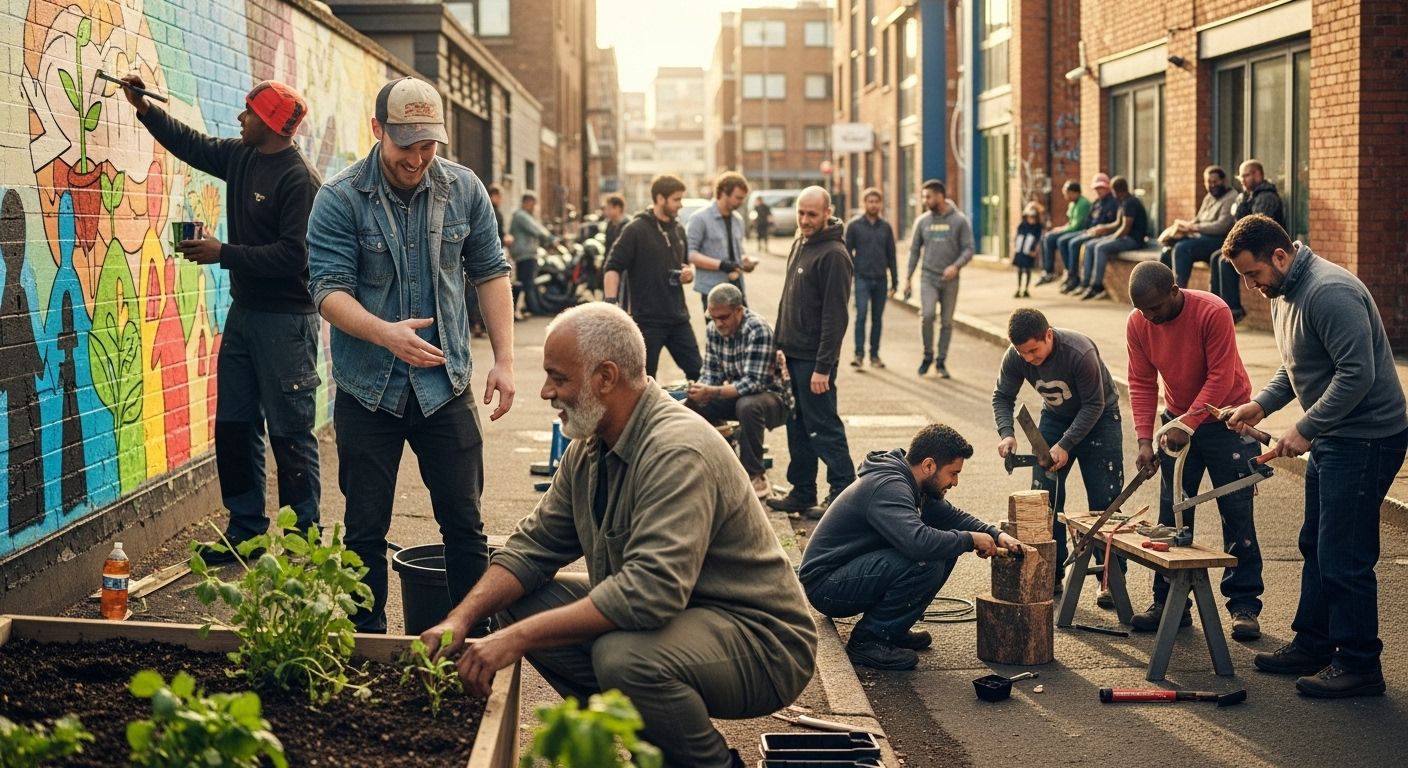
Alright, picture this: you’re at a village hall meeting in Cumbria, biscuits going stale, the projector’s flickering like a faulty fairy light, and someone leans over and whispers, *“We’re using ABCD now.”* Your brain does a full *Doctor Who* time-warp—*is it a policy? a funding acronym? or just the name of the new tea brand they’re trialling?* Nah, love—it’s none of those. abcd community development stands for *Asset-Based Community Development*, and—brace yourself—it’s not about bulldozers, grants, or clipboard-wielding “experts” parachuting in to “fix” things. It’s about *people*. Real ones. With skills, stories, sheds full of tools, and that one neighbour who *definitely* knows how to fix a boiler *and* bake a mean Bakewell tart. The abcd community development approach flips the script: instead of asking *“What’s broken?”*, it starts with *“What’s already brilliant here?”*
So What *Does* ABCD Stand For in Community Development? (No, It’s Not “Always Bring Custard Doughnuts”)
Let’s spell it out—properly, like writing your name on a library card in Year 3:
- A = Asset-Based — Focus on strengths, not deficits. Your gran’s knitting circle? An asset. The lad who fixes bikes for free? Asset. The overgrown allotment that *could* feed half the street? Still an asset—just needs a bit of love and a council permit.
- B = Community — Not “the public”, not “beneficiaries”—*actual* people, rooted in place, with names, nicknames, grudges, and shared memories of the 2007 village fete flood.
- D = Development — Slow, organic, co-created change. Not a 12-month project with a Gantt chart. Think: compost heap—starts small, needs turning, smells a bit odd at first, but *blooms* over time.
Missing a ‘C’? Ah—sharp eye! The full form’s *Asset-Based Community Development*—so the ‘C’ sneaks in twice, like a double consonant in a Yorkshire surname. (See? Even the acronym’s got character.) This isn’t charity. It’s *solidarity with scaffolding*.
The Core Principles of ABCD: Less PowerPoint, More Potluck
Forget five-year strategies drafted in beige offices. The abcd community development model rests on five bedrock principles—like the stones holding up a dry-stone wall in the Peak District:
- Every community has assets — Not “potential”. *Existing* gifts: skills, spaces, networks, history, even local legends (yes, *that* haunted bus stop counts).
- Decision-making power stays local — Outsiders facilitate; residents lead. No “consultation” where the answer’s already in the proposal appendix.
- Relationships drive change — Trust > targets. A cuppa with Mrs. Gupta who runs the corner shop reveals more than three focus groups ever could.
- Internal resources come first — Before chasing £50k grants, ask: Who’s got a van? Who’s retired and brilliant with spreadsheets? Who’s got a spare room for meetings?
- Action precedes perfection — Start small. A litter-pick → community garden → tool library. Momentum builds like steam in a proper kettle.
As Kretzmann & McKnight—yes, the OGs of abcd community development—put it: *“Communities are not baskets to be filled, but fireworks to be ignited.”* (Poetic *and* practical. Rare combo.)
What’s the ABCD Technique? (Spoiler: It Involves More Listening Than Talking)
The abcd community development *technique* isn’t one tool—it’s a *toolkit*, used like a proper multi-grip wrench: adaptable, sturdy, no flimsy plastic bits. Key methods include:
- Asset Mapping — Not Google Maps, but *people* maps. Go door-to-door (or stall-to-stall at the market) asking: *“What can *you* offer?”* Skills, tools, time, space—even “I make excellent tea under pressure”.
- Associational Life Mapping — Who gathers where? Choirs, darts teams, toddler groups, allotment committees—these are the *real* civic infrastructure. More vital than any council building.
- Listening Campaigns — Trained locals (not consultants) host informal chats: walks, bus stops, pub corners. No forms. Just: *“What makes you proud of this place? What grinds your gears?”*
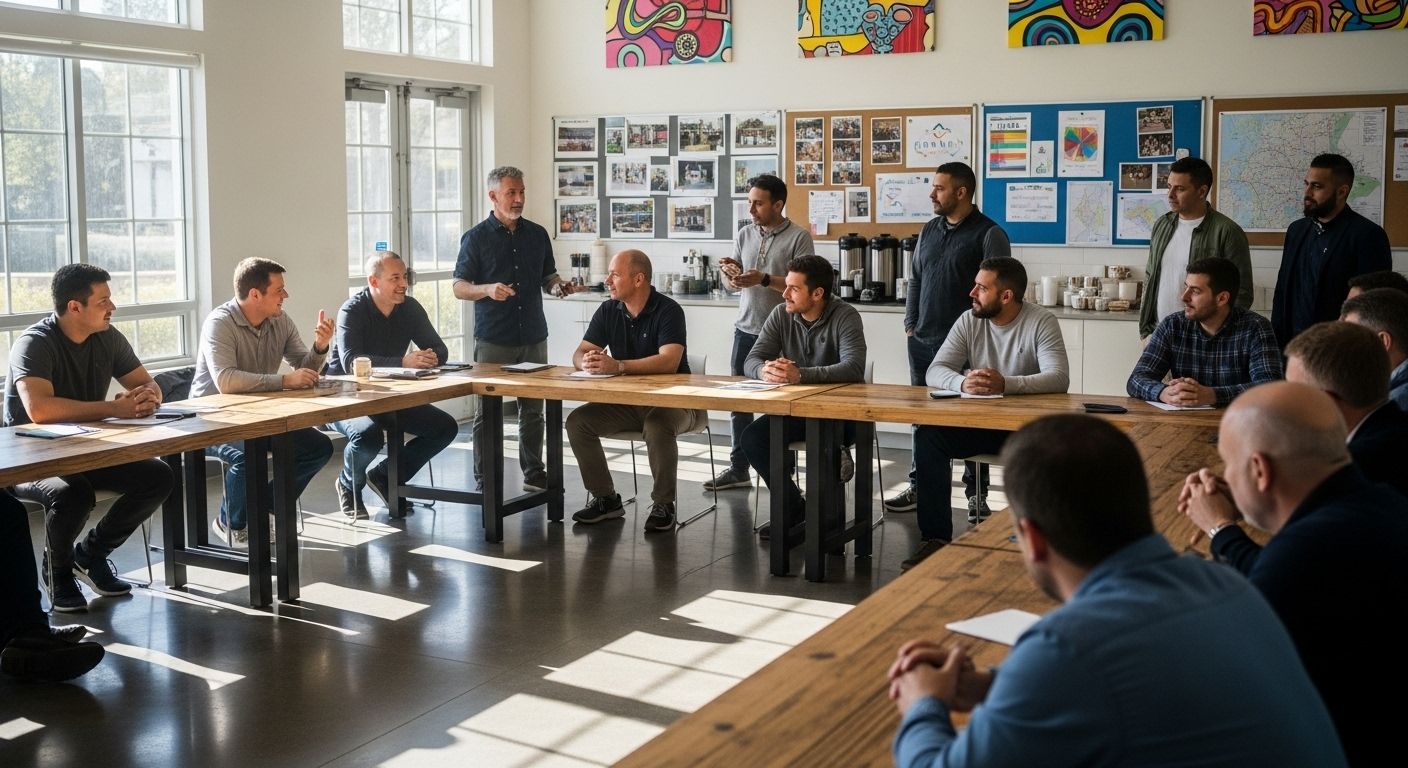
- Small-Group Action Circles — 5–7 people, one concrete goal (“Fix the playground gate by June”), meet fortnightly in the school hall with biscuits provided.
Crucially? No surveys with 47 questions. If your “engagement” feels like a DMV queue, you’re doing it wrong.
The ABCD Model in Practice: From Theory to Trowel—and Tea
Let’s ground this. Here’s how the abcd community development model unfolds—*not* as a flowchart, but as a lived rhythm, like tide times on the North Sea coast:
| Phase | What Happens | Real-World Example |
|---|---|---|
| Discover | Map assets: people, places, groups, stories. | Stoke-on-Trent project found 127 skilled potters—retired, underemployed, or hobbyists—*before* seeking external trainers. |
| Connect | Bring asset-holders together. Host a “skills swap” in the church hall. | Leeds estate linked a retired electrician with a youth group wanting to wire their new music studio. |
| Decide | Small groups pick *one* winnable goal. No grand masterplans. | “Turn the derelict phone box into a free book exchange.” Done in 3 weeks. Cost: £8.73 (paint + glue). |
| Act | Do it. Document it. Celebrate it—*even if it’s tiny*. | After planting window boxes, they held a “Best Bloom” vote—winner got a tin of Quality Street. |
| Reflect & Scale | What worked? Who joined in? What’s next? | Book box → 6 more → mobile library trolley → partnership with city council for seed funding. |
Notice what’s *missing*? Consultants. KPIs. Quarterly reports to funders. The abcd community development model thrives on *lightness*—like a well-made Victoria sponge.
Why ABCD Beats the Old “Needs-Based” Approach (Which Often Feels Like a Pity Party with Biscuits)
Traditional community work often starts with a *needs assessment*—a well-meaning but soul-crushing exercise that ends up listing: *poverty, isolation, unemployment, poor health*. You’d think you were reading a 19th-century parish ledger. The abcd community development lens swaps the script:
“Instead of seeing a ‘deprived area’, we see a place where 72 people volunteer weekly, 3 community kitchens feed 200 families, and a retired teacher runs free maths clubs in her garage.”
Psychologically? It’s transformative. People shift from *“We’re a problem”* to *“We’re the solution”*. And funders love it too—projects built on local ownership have 3.2x higher sustainability after external funding ends (Joseph Rowntree Foundation, 2023). Less dependency. More dignity. Proper.
Common Pitfalls—Or, How Not to ABCD Like a Tourist Asking for Directions in Geordie
Even the best intentions can go sideways. Here’s where abcd community development efforts stumble—and how to avoid it:
- Mistaking “community” for “the usual suspects” — If your asset map only includes the vicar, the headteacher, and the Rotary Club chair—you’ve missed 80% of the talent. Go to the park. The laundrette. The bus stop at 3 pm.
- Rushing to “solutions” before listening deeply — Nope. Spend 6 weeks just *hearing*. The real need isn’t always what’s shouted loudest.
- Using ABCD as a branding exercise — Slapping “Asset-Based” on a top-down project isn’t ABCD—it’s *asset-washing*. Residents spot the difference faster than a seagull spotting a dropped pasty.
- Ignoring power dynamics — Yes, the estate has assets—but if certain voices are always drowned out, your “inclusive” map is fiction. Facilitation must be *skilled*, not just well-meaning.
Remember: ABCD isn’t a *method* you “apply”. It’s a *mindset* you *live*. Like remembering to say “ta” instead of “thanks” when you’re up North.
Where Has ABCD Made Real Waves? (Beyond the Pilot Project Poster Boards)
This isn’t just theory. Across the UK, abcd community development is quietly reshaping places:
- Newtown, Powys — Used asset mapping to launch a community-owned hydro scheme. Profits fund youth work. Resident ownership: 100%.
- Govan, Glasgow — “Govan’s Got It” campaign uncovered 300+ local skills. Led to a tool library, repair café, and—yes—a community-owned pub.
- Brixton, London — Elders + teens co-designed a “memory garden” using oral histories. Now a Grade II-listed community space.
- Whitby, North Yorkshire — Fishermen, artists, and retired nurses built a coastal resilience group *before* the Environment Agency showed up. Now a national case study.
None had “£1m starter grants”. All began with *one conversation*, one shared cuppa, one stubborn belief that *they already had what it took*.
Stats That Might Make a Councillor Put Down Their Spreadsheet
Let’s get empirical—because even poets need data:
- Communities using abcd community development report 41% higher levels of social trust within 18 months (Carnegie UK Trust, 2024).
- Volunteer retention is 2.8x higher when people join asset-driven (not deficit-driven) initiatives.
- In areas with sustained ABCD work, emergency food parcel use dropped by 33%—not from more food banks, but from mutual aid networks *already in place*.
- Local authorities using ABCD report £4.20 ROI for every £1 spent on facilitation—via reduced service demand, increased volunteering, and lower conflict resolution costs.
Still think it’s “just nice chat”? Mate, it’s *infrastructure*—just not the kind you can photograph with a drone.
Your Next Steps: Beyond the Blog Scroll—Get Your Hands Dirty (Literally, Maybe)
So you’re fired up about abcd community development? Brilliant. Don’t just bookmark this—*do something*. Fancy seeing how this philosophy shapes deeper research and action? Start at our hub: Jennifermjones.net. Want to explore how fields like sociology, urban planning, and participatory design intersect with grassroots power? Dive into our dedicated section: Fields. And if you’re drafting a thesis, dissertation, or serious community proposal—and need to frame it with academic rigour *and* real-world soul—don’t miss our guide: definition dissertation craft your research. No jargon. Just clarity, craft, and a fair bit of heart.
Frequently Asked Questions
What does ABCD stand for in community development?
ABCD stands for Asset-Based Community Development. It’s an approach that focuses on identifying and mobilising existing strengths—skills, associations, physical spaces, cultural heritage—within a community, rather than starting from problems or deficits. The ‘C’ appears twice: *Asset-Based Community Development*.
What are the key principles of ABCD?
The five key principles of abcd community development are: (1) Every community has assets; (2) Decision-making power must remain with residents; (3) Relationships are the engine of change; (4) Internal resources are prioritised before external funding; and (5) Small, visible actions build momentum faster than grand plans. It’s about agency, not aid.
What is the ABCD technique?
The abcd community development technique includes practical methods like *asset mapping* (cataloguing local skills and resources), *associational mapping* (identifying informal groups), *listening campaigns* (deep, informal conversations), and *small-group action circles*. Crucially, it avoids top-down surveys—favouring trust-building over data extraction.
What is the ABCD model?
The abcd community development model is a cyclical, five-phase process: Discover (map assets), Connect (bring people together), Decide (choose small, winnable goals), Act (do it—quickly), and Reflect & Scale (learn, celebrate, grow). It’s iterative, resident-led, and designed for sustainability—not dependency.
References
- https://www.jrf.org.uk/report/asset-based-community-development-evidence-review
- https://carnegieuk.org/publication/community-powered-change
- https://abcdinstitute.org/what-is-abcd/
- https://www.localtrust.org.uk/resources/abundant-communities