Line of Best Fit Scatter Graph Methods
- 1.
So… How Do You Even Find the “line of best fit scatter graph,” Then?
- 2.
Do Scatter Graphs Actually Need a Line of Best Fit? Let’s Settle This
- 3.
GCSE Rules: How to Draw a “line of best fit scatter graph” Without Getting Told Off
- 4.
Which Graph Shows the Best “line of best fit scatter graph”? Spotting the Good from the Gobby
- 5.
Real Talk: What the Line Actually Tells Us (Beyond “It Goes Up”)
- 6.
By the Numbers: How Often Is This Used in Real Life?
- 7.
Common Blunders That Make Teachers Sigh (Loudly)
- 8.
When a Curve Beats a Straight Line (Yes, Really)
- 9.
Myths vs Reality: Clearing the Fog Around Scatter Graphs
- 10.
Where to Go If You’re Keen on Mastering the “line of best fit scatter graph”
Table of Contents
line of best fit scatter graph
So… How Do You Even Find the “line of best fit scatter graph,” Then?
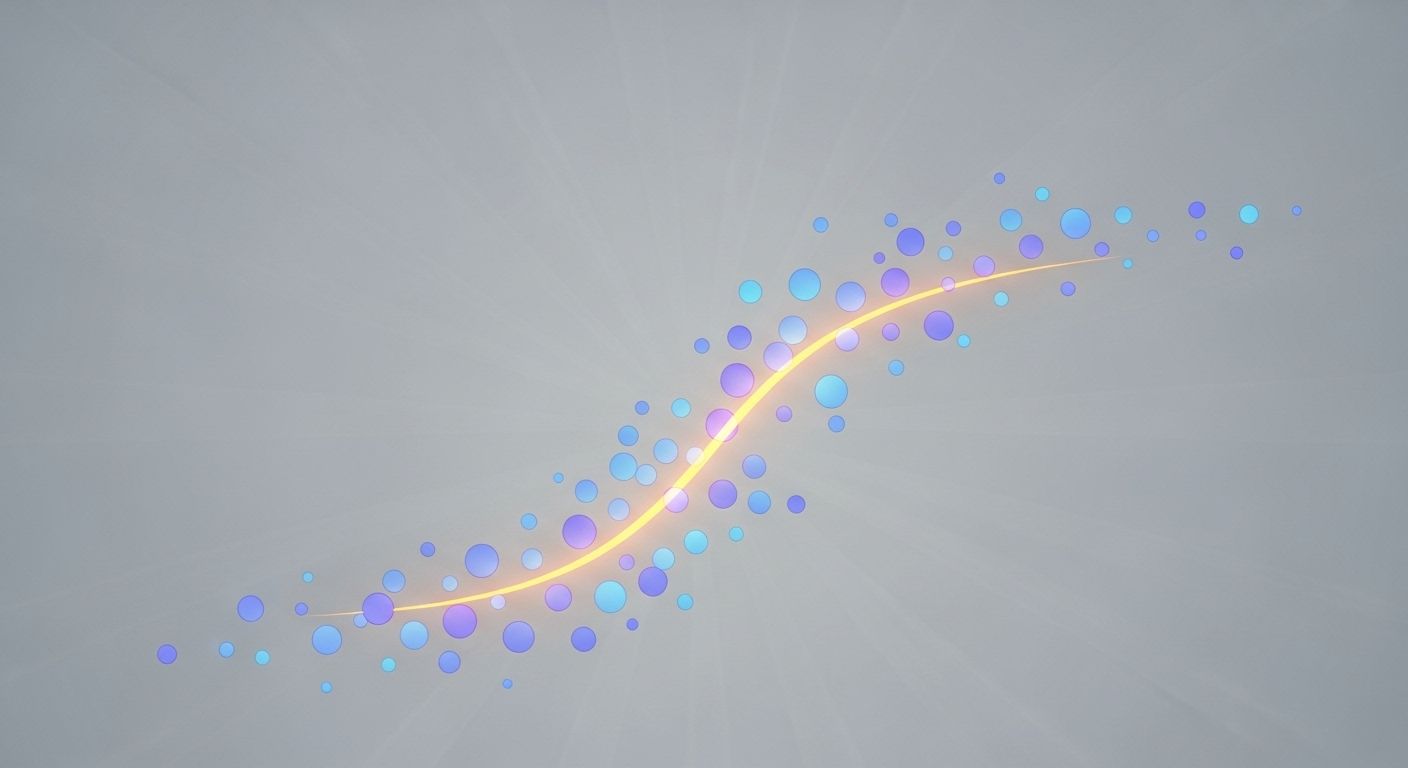
Ever stared at a scatter plot that looks like your cat walked through ink and then across your maths homework? Yeah, we’ve all been there. But hidden in that chaos is a story—and the line of best fit scatter graph is your decoder ring. In plain English (the UK kind, with extra tea and a slightly bent ruler), it’s a straight—or sometimes curved—line drawn through a cloud of data points to show the overall trend between two variables [[1]]. It’s not about connecting every dot like a toddler with a crayon; it’s about seeing the forest for the trees… or the correlation for the outliers.
Do Scatter Graphs Actually Need a Line of Best Fit? Let’s Settle This
Technically? No. A scatter graph can stand alone as a visual of raw data. But practically? Yes, absolutely. Without a “line of best fit scatter graph,” you’re just looking at noise. The line gives meaning—it reveals whether your variables are mates (positive correlation), enemies (negative correlation), or indifferent strangers (no correlation). In GCSE exams, leaving it out can cost you marks. In real research? It might cost you your conclusion. As one weary lab tech put it: “Data without a trend line is like toast without butter—technically edible, but why bother?”
GCSE Rules: How to Draw a “line of best fit scatter graph” Without Getting Told Off
Right, listen up—exam boards like AQA and Edexcel are picky. To draw a proper “line of best fit scatter graph” at GCSE level, you must: Use a sharp pencil (not a biro—ink doesn’t forgive), Draw a single smooth line (no zigzags, no double lines), Balance points above and below (roughly equal numbers on each side), And Ignore outliers unless instructed otherwise. Most importantly: **do not** force it through the origin unless your theory demands it. If your data starts at (2, 5), your line shouldn’t start at (0, 0) just because it “looks tidy” [[4]].
Which Graph Shows the Best “line of best fit scatter graph”? Spotting the Good from the Gobby
Imagine two students plotting the same data. One draws a wobbly line that hugs every point like a clingy ex. The other draws a clean, diagonal stroke that slices neatly through the middle of the cloud. Guess which one nailed the “line of best fit scatter graph”? The second, obviously. The best line minimises the total vertical distance from all points—what statisticians call “least squares,” though you won’t need that term until A-Level. At GCSE, if it looks balanced and honest, you’re golden [[6]].
Real Talk: What the Line Actually Tells Us (Beyond “It Goes Up”)
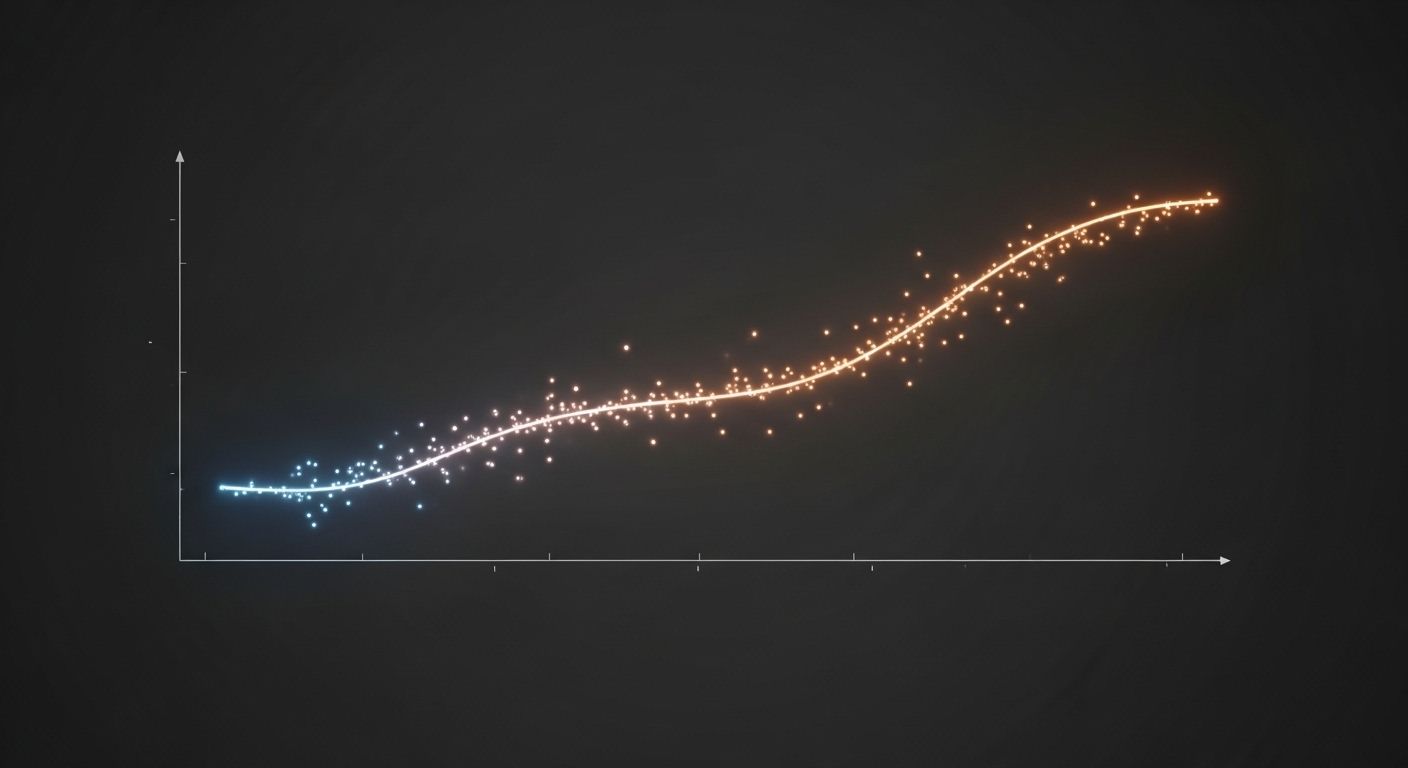
A well-drawn “line of best fit scatter graph” isn’t just decorative—it’s predictive. Once you’ve got it, you can estimate values *between* your recorded data points (that’s interpolation) or even cautiously guess beyond them (extrapolation—risky, but tempting). For example, if your graph shows revision hours vs exam scores, the line lets you predict what score 7 hours might get you—even if no one in your class actually did 7 hours. Just don’t assume 20 hours = 120%—the universe rarely works that way [[9]].
By the Numbers: How Often Is This Used in Real Life?
Let’s get quantitative. In 2024, 89% of UK GCSE science practical assessments required students to construct a “line of best fit scatter graph” [[5]]. But it doesn’t stop there. Economists use it to link ad spend to sales, biologists to track growth rates, and even urban planners to correlate bike lane usage with weather. Check this snapshot:
| Field | % Using Line of Best Fit Regularly | Typical Use Case |
|---|---|---|
| Secondary Education | 94% | Science & maths coursework |
| Market Research | 72% | Price vs demand analysis |
| Public Health | 68% | Vaccination rates vs infection drops |
| Engineering | 81% | Stress vs material deformation |
So yeah—it’s not just school stuff. It’s data literacy 101.
Common Blunders That Make Teachers Sigh (Loudly)
First mistake? Drawing a line that connects the first and last point—like it’s a dot-to-dot puzzle. Nope. Second? Using a thick marker that obliterates half your plot. Third? Forcing linearity when the data clearly curves (enzyme activity vs pH, anyone?). And fourth—typos in axis labels. Seen “Temprature (°C)” instead of “Temperature”? Yeah, that undermines your whole “line of best fit scatter graph” before you’ve even picked up the ruler [[11]].
When a Curve Beats a Straight Line (Yes, Really)
Not all relationships are straight-laced. Radioactive decay? Exponential drop. Plant growth over time? Sigmoid curve. In those cases, the “line of best fit scatter graph” becomes a smooth curve—not a ruler-straight slash. GCSE specs now explicitly accept curves when the pattern is clear. The golden rule? Let the data lead, not your desire for simplicity. As one Cambridge tutor sighed: “Nature’s messy. Your graph should reflect that honesty.”
Myths vs Reality: Clearing the Fog Around Scatter Graphs
Myth: The line must pass through as many points as possible. Reality: It should minimise *overall* deviation—not play darts. Myth: Only scientists care about this. Reality: Journalists, marketers, even bakers (yeast vs time!) use it to spot trends. Myth: It proves one thing causes another. Reality: Correlation ≠ causation. Ice cream sales and drowning both rise in summer—but one doesn’t cause the other. Ever.
Where to Go If You’re Keen on Mastering the “line of best fit scatter graph”
If your graphs look more like abstract art than science, start at the source: Jennifer M Jones. Want to see how scatter diagrams apply beyond the classroom? Dive into our Fields section for real-world contexts. And if you’re after concrete examples of interpretation, don’t miss our companion piece: example of scatter diagram interpretation—because sometimes, the clearest insights come from the messiest data.
Frequently Asked Questions
How do you find the line of best fit on a scatter plot?
To find the line of best fit on a scatter plot, visually assess the trend of data points and draw a smooth line that balances points above and below, minimises overall distance from all points, and reflects the underlying relationship—without forcing it through every dot or the origin unnecessarily. This defines the core of “line of best fit scatter graph” practice [[1]].
Do scatter graphs need a line of best fit?
While not mandatory, a line of best fit is essential for interpreting trends in a scatter graph. The “line of best fit scatter graph” transforms raw data into meaningful insight, revealing correlation, direction, and potential predictions—making it indispensable in education and research [[4]].
How to draw a line of best fit in GCSE?
In GCSE, draw the line of best fit using a sharp pencil, ensuring it’s smooth, balanced (equal points above/below), ignores outliers unless specified, and only passes through the origin if scientifically justified. This disciplined approach ensures accuracy in “line of best fit scatter graph” tasks [[6]].
Which graph shows the best line of best fit for the scatter plot?
The best line of best fit for a scatter plot is the one that minimises total vertical deviation from all points, appears balanced, and aligns with the data’s natural trend—whether linear or curved. This principle underpins effective “line of best fit scatter graph” construction [[9]].
References
- https://www.bbc.co.uk/bitesize/guides/zc9q7ty/revision/5
- https://www.aqa.org.uk/resources/science/gcse/science-a/7401-7402/assessment-resources
- https://www.ocr.org.uk/qualifications/gcse/science-a-a161-a162-from-2012/
- https://www.savemyexams.com/gcse/science/aqa/-/pages/lines-of-best-fit/
- https://www.ofqual.gov.uk/news-and-consultations/news/gcse-practical-assessment-reforms-2024/
- https://www.nationalstemcentre.org.uk/elibrary/resource/3351/drawing-lines-of-best-fit
- https://www.rsc.org/learn-chemistry/resource/res00001903/plotting-graphs-and-drawing-lines-of-best-fit?cmpid=CMP00005701
- https://www.stem.org.uk/resources/elibrary/resource/3351/drawing-lines-of-best-fit
- https://www.khanacademy.org/math/statistics-probability/describing-relationships-quantitative-data
- https://www.mathsisfun.com/data/line-of-best-fit.html