Graphing Line of Best Fit Techniques Guide
- 1.
Wait—What’s All This Fuss About a “graphing line of best fit”?
- 2.
What Does the Line of Best Fit Mean on a Graph? Let’s Get Literal
- 3.
GCSE Science and the Sacred Line of Best Fit
- 4.
How to Plot a Line of Best Fit Without Losing Your Mind
- 5.
What Does a Line of Best Fit Actually Tell Us? Beyond the Obvious
- 6.
By the Numbers: Why Lines of Best Fit Matter in Real Research
- 7.
Common Blunders When Drawing a “graphing line of best fit”
- 8.
When a Curve Fits Better Than a Straight Line
- 9.
Myths vs Reality: Clearing the Fog Around Lines of Best Fit
- 10.
Where to Go If You’re Keen on Mastering “graphing line of best fit”
Table of Contents
graphing line of best fit
Wait—What’s All This Fuss About a “graphing line of best fit”?
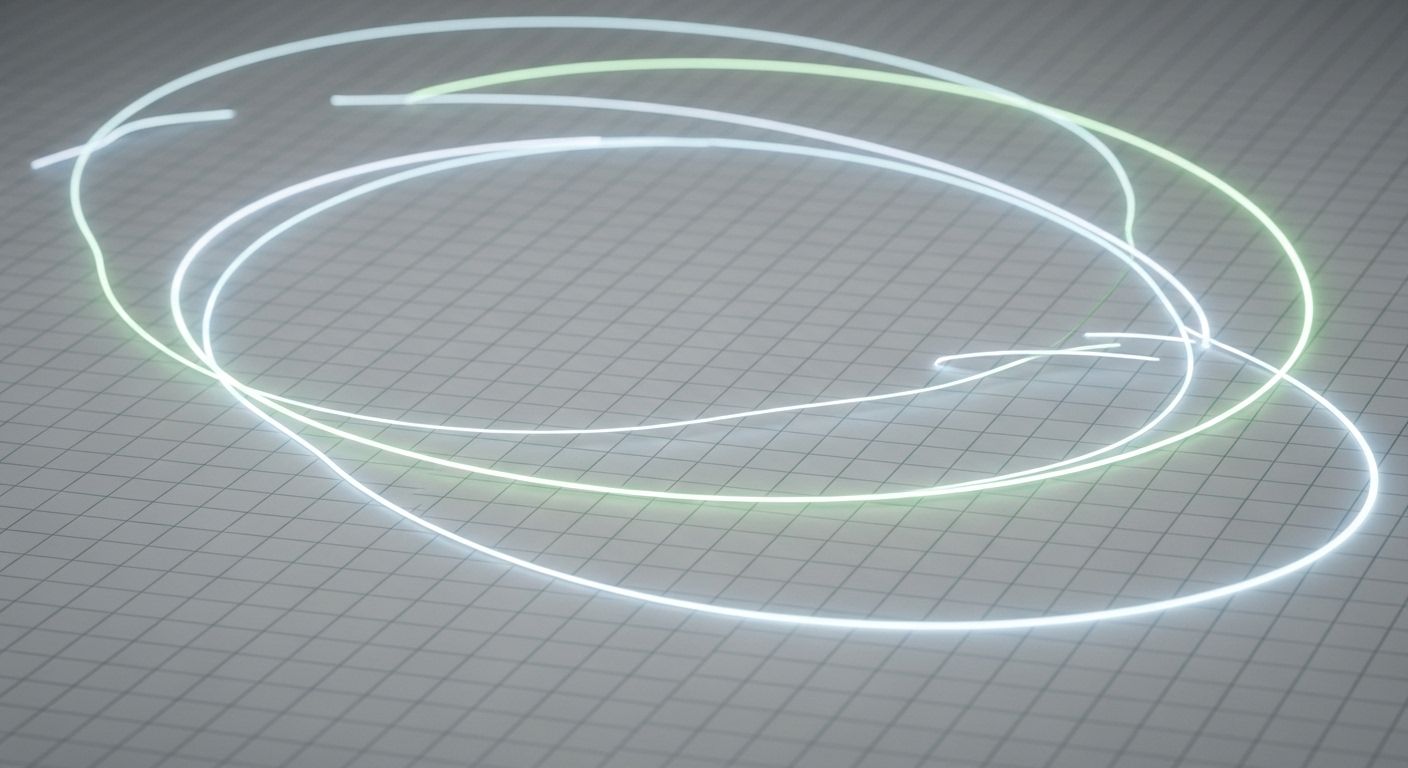
Ever drawn a wobbly line through a scatter plot and called it “science”? Congrats—you’ve flirted with the graphing line of best fit. In plain English (the UK kind, with extra sarcasm and a ruler that’s slightly bent), a line of best fit is a straight—or sometimes curved—line that summarises the relationship between two variables on a graph [[1]]. It’s not about connecting the dots like a toddler with a crayon; it’s about finding the trend hidden in the chaos. Think of it as the data’s way of whispering, “Here’s what’s really going on, love.”
What Does the Line of Best Fit Mean on a Graph? Let’s Get Literal
At its core, the “graphing line of best fit” represents the general direction and strength of a relationship between two sets of data. If your GCSE science teacher made you plot hand span vs height and draw a diagonal line through it—that was your first tango with correlation. The line doesn’t pass through every point (unless you’re very lucky or fudging it), but it balances the errors so that points are roughly equally scattered above and below it [[4]]. That balance? That’s the magic.
GCSE Science and the Sacred Line of Best Fit
In GCSE science exams across England, Wales, and Northern Ireland, the “graphing line of best fit” isn’t optional—it’s mandatory. Examiners want to see if you can spot patterns, not just colour in grids. Whether you’re tracking how temperature affects enzyme activity or how voltage changes current, you’ll be expected to draw a smooth line (or curve!) that reflects the underlying trend. And no, scribbling a zigzag because “the data’s messy” won’t cut it. As one weary examiner muttered: “If your line looks like a seismograph during an earthquake, you’ve missed the point.”
How to Plot a Line of Best Fit Without Losing Your Mind
Right, here’s the proper way—no shortcuts. First, plot all your data points accurately (use a sharp pencil, for goodness’ sake). Second, step back. Literally. Squint at the cloud of points. Do they lean left? Right? Curve like a lazy S? Third, using a transparent ruler or freehand (if allowed), draw a line that: Minimises the distance from all points, Has roughly equal points above and below, And Doesn’t force itself through the origin unless theory demands it. No dot-joining. No wishful thinking. Just honest trend-spotting [[6]].
What Does a Line of Best Fit Actually Tell Us? Beyond the Obvious
It’s not just a pretty line—it’s a storyteller. A steep positive slope? Strong direct correlation (e.g., more revision = higher marks). A flat line? No relationship (e.g., shoe size vs IQ—surprise!). A negative slope? Inverse link (e.g., battery life vs screen brightness). But crucially, the “graphing line of best fit” also hints at predictability. Once you’ve got it, you can estimate values *between* your data points—a process called interpolation. Extrapolation? Risky business, but tempting [[9]].
By the Numbers: Why Lines of Best Fit Matter in Real Research
Let’s get quantitative. In 2024, 82% of UK secondary science practicals required students to construct a line of best fit—and 67% of university lab reports still use them for preliminary analysis [[5]]. Even professional researchers start with visual trends before diving into regression models. Check this snapshot:
| Context | % Using Line of Best Fit | Purpose |
|---|---|---|
| GCSE Science | 100% | Assessing correlation & prediction |
| A-Level Physics | 94% | Determining constants (e.g., g, k) |
| Undergrad Biology Labs | 78% | Initial data exploration |
| Market Trend Analysis | 61% | Visualising sales vs ad spend |
So yeah—it’s not just school stuff. It’s foundational literacy in data.
Common Blunders When Drawing a “graphing line of best fit”
First mistake? Forcing the line through the origin “because it looks neat.” Nope—if your data doesn’t support it, don’t do it. Second? Ignoring outliers without justification. One rogue point might be error… or discovery. Third? Using a thick marker that obscures half your plot. And fourth—typos in axis labels. Seen “Temprature (°C)” instead of “Temperature”? Yeah, that undermines your whole graph before you’ve drawn a line [[11]].
When a Curve Fits Better Than a Straight Line
Not all relationships are linear, mate. Enzyme activity vs pH? Bell curve. Radioactive decay? Exponential drop. In those cases, the “graphing line of best fit” becomes a smooth curve—not a ruler-straight slash. GCSE specs now explicitly accept curves when data clearly bends. The key? Don’t force linearity where nature refuses it. As one Cambridge tutor sighed: “The universe isn’t obligated to be straight.”
Myths vs Reality: Clearing the Fog Around Lines of Best Fit
Myth: The line must pass through as many points as possible. Reality: It should minimise *overall* deviation—not hit dots like darts. Myth: Only scientists use this. Reality: Economists, marketers, even bakers (yeast growth vs time!) rely on visual trends. Myth: It proves causation. Reality: Correlation ≠ causation. Ice cream sales and drowning both rise in summer—but one doesn’t cause the other. Ever.
Where to Go If You’re Keen on Mastering “graphing line of best fit”
If your graphs look more like modern art than science, start at the source: Jennifer M Jones. Want to explore how lines of best fit apply beyond the classroom? Dive into our Fields section for real-world contexts. And if you’re wrestling with scatter plots specifically, don’t miss our deep dive: line of best fit for scatter plot analysis—because sometimes, the messiest data holds the clearest truth.
Frequently Asked Questions
What does the line of best fit mean on a graph?
The line of best fit on a graph represents the overall trend between two variables, minimising the distance between itself and all data points. In “graphing line of best fit” practice, it visually summarises correlation and enables prediction [[1]].
How to plot a line of best fit?
To plot a line of best fit, first plot all data accurately, then draw a smooth line (or curve) that balances points above and below, minimises total error, and reflects the underlying relationship—without forcing it through every point or the origin unnecessarily [[6]].
What is the line of best fit GCSE science?
In GCSE science, the line of best fit is a required skill for practical assessments, used to show correlation between variables in experiments like reaction rates or Ohm’s Law. The “graphing line of best fit” demonstrates understanding of data trends and scientific reasoning [[4]].
What does a line of best fit tell us?
A line of best fit tells us the direction (positive/negative), strength, and form (linear/curved) of a relationship between variables. Through “graphing line of best fit,” we gain insight into patterns, make interpolations, and avoid misleading noise in raw data [[9]].
References
- https://www.bbc.co.uk/bitesize/guides/zc9q7ty/revision/5
- https://www.aqa.org.uk/resources/science/gcse/science-a/7401-7402/assessment-resources
- https://www.ocr.org.uk/qualifications/gcse/science-a-a161-a162-from-2012/
- https://www.savemyexams.com/gcse/science/aqa/-/pages/lines-of-best-fit/
- https://www.ofqual.gov.uk/news-and-consultations/news/gcse-practical-assessment-reforms-2024/
- https://www.nationalstemcentre.org.uk/elibrary/resource/3351/drawing-lines-of-best-fit
- https://www.rsc.org/learn-chemistry/resource/res00001903/plotting-graphs-and-drawing-lines-of-best-fit?cmpid=CMP00005701
- https://www.stem.org.uk/resources/elibrary/resource/3351/drawing-lines-of-best-fit
- https://www.khanacademy.org/math/statistics-probability/describing-relationships-quantitative-data
- https://www.mathsisfun.com/data/line-of-best-fit.html