BBC Sports Journalists: Voices of the Game
- 1.
Ever sat in a Wetherspoons at half-five, pint in hand, muttering “Blimey—wasn’t he on *Grandstand* in ’92?” Yep. Us too. Let’s talk bbc sports journalists.
- 2.
The golden era: bbc sports journalists who built the playbook (and wore questionable ties)
- 3.
Clive Tyldesley, John Motson, and the art of the *Commentary Banger™*
- 4.
The rise of the Black male pioneer: bbc sports journalists who broke the mic—and the mould
- 5.
Who’s on the telly *right now*? Meet today’s frontline bbc sports journalists
- 6.
Radio rebels: The unsung bbc sports journalists of 5 Live and local waves
- 7.
How much do bbc sports journalists *actually* earn? (Spoiler: not what you think)
- 8.
Women, LGBTQ+, and the quiet revolution inside bbc sports journalists ranks
- 9.
Training, trauma, and tenacity: How do you *become* a bbc sports journalists?
- 10.
Your next stop on the bbc sports journalists pilgrimage
Table of Contents
bbc sports journalists
Ever sat in a Wetherspoons at half-five, pint in hand, muttering “Blimey—wasn’t he on *Grandstand* in ’92?” Yep. Us too. Let’s talk bbc sports journalists.
Right—picture this: it’s 1987. Your nan’s ironing. The telly’s on. A bloke with a voice like melted toffee and hair like it’s been wrestled by a Highland gale leans into the mic and says, “And *that*, ladies and gents, is how you score a winner in injury time.” You don’t know his name—but you know *that* voice. That’s the magic of bbc sports journalists: they don’t just report the game—they *score* it into your memory. From crackling radio bulletins to 4K replays, these folks turned “Oh, they lost” into full-blown national melodrama. And honestly? We’re still quoting them over Sunday roasts.
The golden era: bbc sports journalists who built the playbook (and wore questionable ties)
Ah, the legends. Frankly, if you haven’t mimicked David Coleman’s “Oh, I say!” at least once, did you even grow up in Britain? The man covered *12* Olympic Games—twelve!—and invented the art of shouting “COME ONNNN!” like your pension depended on it. Then there’s Harry Carpenter—boxing’s poet laureate—who described Ali’s “Rumble in the Jungle” like it was Shakespeare in gloves: “*He’s dancing, but he’s not dancing for joy—he’s dancing for survival.*” Pure theatre. And let’s not forget Frank Bough, the anchorman who somehow made *Sunday Grandstand* feel like a family picnic—even when the pitch was ankle-deep in mud and despair. These bbc sports journalists didn’t need graphics or hashtags. A mic, a stopwatch, and sheer *gravitas* did the job.
Clive Tyldesley, John Motson, and the art of the *Commentary Banger™*
Let’s be real—some moments in sport *only* happened because a bbc sports journalist screamed them into existence. “AGUEROOOO!”? That’s Clive Tyldesley turning biology into folklore (adrenaline spike: *guaranteed*). And Motty—oh, sweet Motty—whose “*They think it’s all over… IT IS NOW!*” lives rent-free in every England fan’s soul since 1966. These aren’t just calls—they’re cultural heirlooms. Tyldesley’s known for his lyrical flow (“*like a gazelle with a season ticket*”), while Motson’s stats were so precise, he probably knew your uncle’s non-league goal tally from ’83. That’s the craft of bbc sports journalists: equal parts historian, poet, and bloke who forgot his brolly.
The rise of the Black male pioneer: bbc sports journalists who broke the mic—and the mould
Now, gather ‘round the wireless for this one. In the 1980s, if you saw a Black face on *Sportsnight*, you sat up straighter—because it was *rare*. Enter Garth Crooks—former Stoke and Spurs man turned razor-sharp pundit. Post-match, he’d dissect tactics like a surgeon, then drop a line like, “That wasn’t a pass—it was a cry for help.” Groundbreaking? Absolutely. But let’s not sleep on Mark Lawrenson’s frequent on-air sparring partner: **Garth wasn’t just a voice—he was a *presence***, asking hard questions while wearing a suit that cost more than your car. Later came **Jason Mohammad**, smooth as a pint of Guinness, hosting *Final Score* and *Match of the Day 2* with the calm of a man who’s seen it all—and still believes in the 89th-minute equaliser. These bbc sports journalists didn’t just fill slots—they *redefined* who got to narrate the national story.
Who’s on the telly *right now*? Meet today’s frontline bbc sports journalists
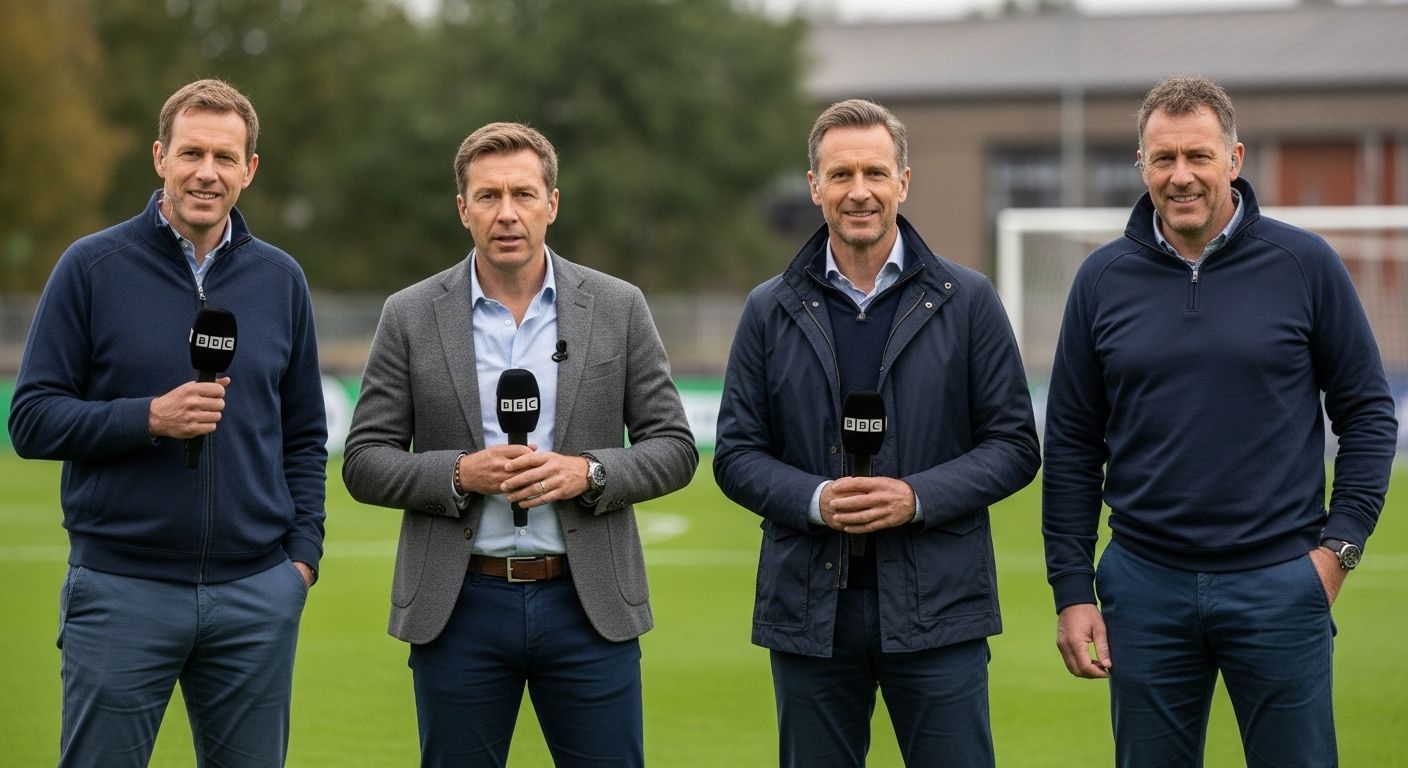
Flip on *MOTD* in 2025, and who do you see? **Mark Chapman**—Chappers—grinning like he’s just nicked the last pork pie, holding the chaos together with charm and a clipboard. Then there’s **Alex Scott**, who went from Arsenal legend to *the* voice of football insight—her analysis so sharp, even Sir Alex leaned in. And don’t overlook **Ore Oduba**, who hops from *Sportsday* to Olympic coverage like it’s a hop, skip, and triple axel. What’s changed? The suits are less beige. The banter’s cheekier. The tech’s fancier. But the heartbeat’s the same: a bbc sports journalist doesn’t *tell* you what happened—they make you *feel* the grass, the roar, the heartbreak. Even in HD.
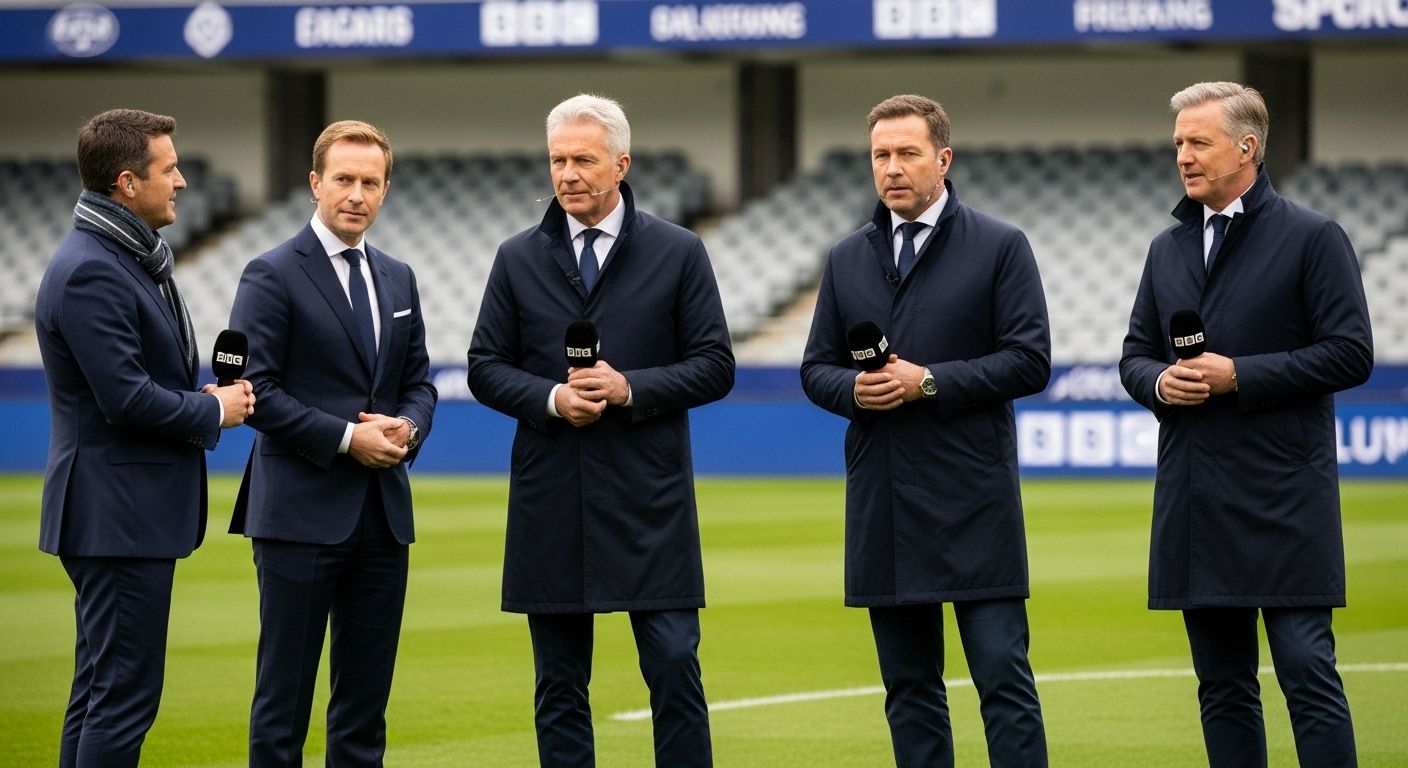
Radio rebels: The unsung bbc sports journalists of 5 Live and local waves
Let’s give it up for the voices in the dark—the bbc sports journalists you *hear*, not see, driving home from a match, rain on the windscreen, tea gone cold. **Kelly Cates** on *5 Live*? She’ll break down VAR like it’s a GCSE physics question—clear, calm, no fluff. **Darren Fletcher** calls Champions League nights like he’s whispering secrets in a pub booth. And regional heroes—like **Richard Wilford** on Radio Manchester or **Lynsey Hipgrave** (yes, she’s still the queen of pitchside)—they keep local passion alive when the Premier League tries to steamroll it. For under £35k/year (yep, *still* undervalued), these bbc sports journalists give us intimacy, urgency, and that glorious crackle of AM radio. Pure nostalgia—with better Wi-Fi.
How much do bbc sports journalists *actually* earn? (Spoiler: not what you think)
Alright, let’s get gossipy—but with spreadsheets. Top-tier bbc sports journalists like Gary Lineker (pre-2023) reportedly pulled ~£1.35m. But the *vast* majority? Not even close. A mid-level presenter on *BBC Sport Online*? ~£42,000. A regional radio reporter? £28,500–£34,000. And freelancers—bless ‘em—are often on daily rates of £250–£450, *before* VAT, travel, and the emotional toll of covering a 7–0 loss. Meanwhile, Sky and TNT are dangling £80k+ for the same CV. Why do so many stay? “Because the *licence fee* means we serve *everyone*,” one told us, over a slightly warm IPA. “Not just the shareholders.” Respect.
Average Earnings of UK Sports Media Roles (2025 est.)
| Role | BBC (Avg.) | Commercial Rival (Avg.) |
|---|---|---|
| Lead Presenter (TV) | £180,000* | £220,000 |
| Commentator (National) | £65,000 | £85,000 |
| Pitchside Reporter | £38,000 | £45,000 |
| Radio Journalist (5 Live) | £33,500 | £39,000 |
*Excludes top 3 ‘marquee’ names; figures based on NUJ & Ofcom industry survey, 2024.
Women, LGBTQ+, and the quiet revolution inside bbc sports journalists ranks
Let’s raise a glass (of non-alcoholic lager, for inclusivity) to the changemakers. **Clare Balding**—OBE, MBE, national treasure—didn’t just *cover* sport; she rewired the narrative, bringing para-sport, horse racing, and mental health into the *mainstream* spotlight with warmth and wit. **Anita Nneka Jones**’ *Sportsworld* segments on grassroots inclusion? *Chef’s kiss.* And **John Inverdale** may’ve retired, but **Jamie Theakston**’s out queer joy on *5 Live Extra* is doing heavy lifting—normalising identity without making it *the* story. The stats? Women now make up 41% of on-air bbc sports journalists (up from 23% in 2010). Progress? Yep. Done? Nah. But the mic’s getting more diverse—and the commentary richer for it.
Training, trauma, and tenacity: How do you *become* a bbc sports journalists?
Think it’s just “being good at banter”? Think again. Most start with a NCTJ Diploma (cost: ~£3,200), then slog through unpaid placements (yes, *still*), local radio shifts at 5 a.m., and writing match reports for *The Non-League Paper* for £25 a pop. One journo told us: “I covered a women’s futsal final in a car park in Croydon. My mic died. I narrated the last 10 mins into my phone. They aired it.” That’s the grit. The BBC’s own training scheme—*BBC Academy*—takes <5% of applicants yearly. And the emotional load? Covering Hillsborough tributes, athlete suicides, or racist abuse on the pitch—that’s not “just a job.” It’s custodianship. And every bbc sports journalist we spoke to said the same: “If you’re not doing it for the *game*, mate—walk away.”
Your next stop on the bbc sports journalists pilgrimage
Fancy diving deeper into media roles and sporting narratives? Brilliant—grab your coat and head to the front door: Jennifermjones.net. Keen to explore how identity shapes voice? Our curated Roles section’s got the full line-up. And if you’re pondering life *after* the pitch—say, a degree in the sciences—our deep-dive into purpose-driven careers might just hit the back of the net: Jobs for Biomedical Science Graduates: Career Paths. Because whether it’s a last-minute winner or a lab breakthrough—*storytelling* is the throughline.
Frequently Asked Questions
Who are the old BBC Sport presenters?
The OGs? Think Frank Bough (host of *Grandstand* and *Sportsnight*), David Coleman (Olympics maestro), Harry Carpenter (boxing bard), and the legendary Des Lynam—whose calm during Italia ’90 made grown men weep. These bbc sports journalists built the template: authority, warmth, and a knack for making darts feel like Wimbledon.
Who is the most famous sports journalist?
Globally? Maybe Dan Shaughnessy or Wright Thompson. But in the UK? Hands down—Gary Lineker. From 1986 World Cup hero to *Match of the Day* legend (1999–2023), his mix of cheeky charm, sharp analysis, and principled stands made him the face—and moral compass—of a generation of bbc sports journalists. Even his Twitter X bio’s iconic: “Professional footballer, part-time tweeter.”
Who was the former black football presenter male?
The trailblazer was **Garth Crooks**—ex-Tottenham defender, then regular on *MOTD* and *BBC Radio 5 Live* from the late ’80s onward. With his incisive “Garth’s Team of the Week” and unflinching takes on racism in football, he paved the way for **Jason Mohammad**, **Jermaine Jenas**, and today’s cohort of Black male bbc sports journalists. As he once quipped: “I’m not *here* to be liked. I’m here to be *right*.”
Who is the male sports presenter on the BBC?
Currently? A rotating squad—but the most visible male bbc sports journalists include **Mark Chapman** (host of *MOTD2*, *Football Focus*), **Gary Lineker** (now freelance, still occasional specials), **Ore Oduba** (Olympics, *Sportsday*), and rising star **Ben Andrews** on *BBC Sport Online*. Notably, the BBC’s consciously moving away from “one main man”—opting for shared hosting, deeper panels, and more regional voices. The era of the solo “face” is evolving—thankfully.
References
- https://www.nuj.org.uk/news/nuj-reports/sports-journalism-pay-and-conditions-2024/
- https://www.ofcom.org.uk/research-and-data/tv-radio-and-on-demand/broadcasting-market-reports/media-nation-2024
- https://www.bbc.co.uk/editorialguidelines/guidelines/diversity-and-inclusion
- https://www.theguardian.com/media/2023/jun/18/bbc-sport-presenter-pay-gap-report