Computer Science Conversion Masters: Switch Careers

- 1.
Why computer science conversion masters are the backdoor into the tech cathedral (and why the bouncer lets you in)
- 2.
What is the MSc computer science conversion program in the UK? A syllabus with soul
- 3.
Top 5 unis for computer science conversion masters — ranked by empathy, not just employability
- 4.
Funding computer science conversion masters: bursaries, bootstraps, and the odd rich uncle
- 5.
The cohort effect: why your classmates matter more than your CPU
- 6.
Is a conversion master a real master? Debunking the ‘lite degree’ myth
- 7.
Career outcomes: where do computer science conversion masters grads actually land?
- 8.
Can I do an MSc in CS without a CS background? Yes — and here’s your syllabus survival kit
- 9.
Is it worth it to get my Masters in computer science? ROI, retraining, and real talk
Table of Contents
computer science conversion masters
Why computer science conversion masters are the backdoor into the tech cathedral (and why the bouncer lets you in)
Ever stared at a terminal prompt, typed “please run?”, and waited for the computer to sigh audibly before shutting down? Yeah — us too. But here’s the thing: you don’t need to’ve built your first Raspberry Pi in the womb to get into tech. Not when computer science conversion masters exist — the academic equivalent of a *“Right, lad — fancy a proper go?”* from a grizzled engineer in a Newcastle pub. These programmes aren’t remedial class — they’re *relaunch pads*. Designed for historians, linguists, nurses, and former baristas who’ve had enough of steaming milk and fancy steaming code instead. A computer science conversion masters assumes *zero* prior CS — but *full* curiosity. And frankly? The world needs more devs who’ve read Dickens *and* debugged Docker.
What is the MSc computer science conversion program in the UK? A syllabus with soul
Let’s cut the jargon — a computer science conversion masters is a 12–24 month full-immersion bootcamp *with a degree certificate and a proper library card*. Unlike coding academies (brilliant, but breathless), these MScs balance *depth* and *pace*. Term 1? You’ll wrestle with Python like it’s your first driving lesson — clutch, stall, restart. Term 2? Data structures, databases, and the existential dread of recursion. Final project? Something *real* — maybe a mental health chatbot (shoutout to our piece on clinical psychology masters programs transform lives, or a climate-data visualiser built with D3.js. Crucially, these computer science conversion masters embed *context*: ethics modules on AI bias, seminars on tech’s colonial legacy, and debates on whether ‘move fast and break things’ should be tattooed *or* prosecuted. Because code isn’t neutral — and neither are coders.
The hidden curriculum of computer science conversion masters: imposter syndrome, then empowerment
First week? You’ll sit next to a maths PhD who wrote their first compiler at 14. Panic sets in. You Google *“can Excel count as programming?”* — twice. But here’s the secret: conversion cohorts *thrive* on diversity. A former museum curator built an AR app for artefact annotation. A midwife coded a predictive model for postnatal risk scoring (validated in partnership with NHS Greater Manchester). These computer science conversion masters aren’t about catching up — they’re about *bringing your whole self to the keyboard*. Your humanities lens? That’s your edge. Your care-sector empathy? That’s your API design philosophy. As one lecturer at Bristol put it: *“We don’t want clones. We want cross-pollinators.”*
Top 5 unis for computer science conversion masters — ranked by empathy, not just employability
League tables won’t tell you which department hands out biscuits *and* breakpoints during lab sessions. So here’s the real lowdown on computer science conversion masters: — **Birkbeck (London)**: Evening classes, part-time-friendly, and *zero* ageism — 32% of students are 35+. Their *MSc Computing* is REF-rated for impact (real projects for charities). — **University of Birmingham**: *MSc Computer Science* includes a 3-month industry placement — grads have gone to Rolls-Royce cyber, BBC R&D, even the Met Police’s digital forensics unit. — **University of Manchester**: Heavy on theory *and* practice; their “Code & Context” module pairs Python with philosophy of tech. — **University of Glasgow**: £9,250 tuition (cheapest Russell Group), plus a *“No Prior Code Required”* pledge. Their grads land at Skyscanner, FanDuel, and Scottish Gov Digital. — **Royal Holloway**: Cybersecurity focus, GCHQ-accredited, and they *actually reply* to emails before Christmas.
| University | Programme Name | Tuition (GBP) | Unique Perk |
|---|---|---|---|
| Birkbeck | MSc Computing | £11,050 | Evening classes; 92% employment in 6mo |
| Birmingham | MSc Computer Science | £13,320 | Guaranteed 12-week industry placement |
| Glasgow | MSc Information Technology | £9,250 | Scottish Living Cost Grant eligible |
| Royal Holloway | MSc Computer Science | £12,200 | GCHQ-certified cybersecurity pathway |
| Manchester | MSc Advanced Computer Science (Conversion) | £14,500 | Access to N8 supercomputing cluster |
Funding computer science conversion masters: bursaries, bootstraps, and the odd rich uncle
Let’s not sugar it — £10k–£15k is steep when you’ve just quit your teaching job to retrain. But help *is* out there. The **Tech Talent Charter** partners with unis to offer *Career Changer Bursaries* (up to £5k for women, ethnic minorities, and disabled learners). **Ada, the National College for Digital Skills**, runs *pre-course prep scholarships* — free Python bootcamps + £2,500 towards fees if you get in. Then there’s the **Skills Bootcamp Follow-On Offer**: complete a free government-funded 16-week coding prep course (like those by Multiverse or Founders and Coders), and you get *fast-tracked* into a computer science conversion masters with £3k off. Pro tip? In your personal statement, don’t say *“I love tech”* — say *“I want to build tools that reduce GP wait times in Cornwall”*. Specificity = funding magnet.
The cohort effect: why your classmates matter more than your CPU
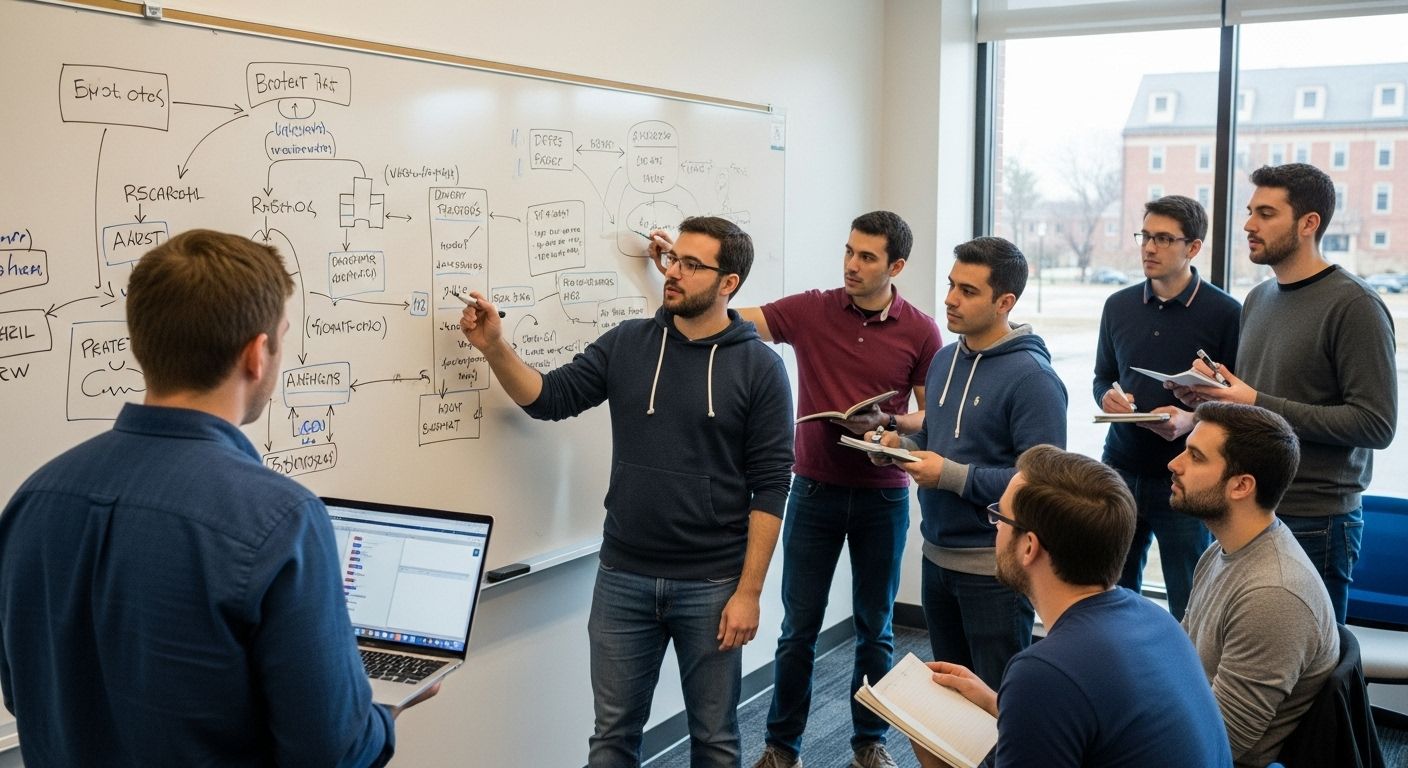
In a computer science conversion masters, your peer group isn’t just study buddies — they’re your first startup co-founders, sanity-checkers, and future LinkedIn lifelines. One 2024 grad from Birmingham’s cohort — a former librarian, a physio, and a jazz pianist — built *Libra*, a volunteer-matching app for food banks, now used across West Yorkshire. They met in the *Agile Development* module’s scrum team. Another group formed a mutual-aid Slack: *“Debugging & Digestives”*, where you post error logs *and* biscuit recommendations. These computer science conversion masters create *communities*, not just coders. And in an industry plagued by burnout? That’s the real MVP — *Most Valuable People*.
Is a conversion master a real master? Debunking the ‘lite degree’ myth
*“Oh, it’s just a conversion — not the *real* MSc.”* — said no hiring manager at the BBC, NHS Digital, or Monzo. Here’s the truth: computer science conversion masters are *accredited*, *QAA-validated*, and often *more rigorous* than standard MScs — because they compress *three years of undergrad* into 12 months. You cover algorithms, OOP, systems architecture — just with extra scaffolding. Graduates sit the same exams. Defend the same dissertations. And crucially — earn the same degree title: *MSc Computer Science*. No asterisk. No footnote. In fact, many employers *prefer* conversion grads: they bring domain expertise (healthcare, law, education) *plus* new tech fluency. As one Google recruiter told us: *“Give me a teacher who learned Python over lockdown any day. They know how to explain things. That’s gold.”*
Career outcomes: where do computer science conversion masters grads actually land?
Forget the “FAANG or bust” nonsense. Most computer science conversion masters grads thrive in *impact zones*: — **Public Sector Digital**: NHS Digital (£34k–£45k), GOV.UK (£38k), local council tech teams (Bristol, Edinburgh leading the charge). — **EdTech & Social Tech**: Oak National Academy, The Brilliant Club, CAST — building tools *for* equity, not just engagement metrics. — **Finance with Conscience**: Monzo, Starling, Triodos — where your ethics module isn’t just theory. — **Freelance & Founding**: 19% of 2023 grads launched consultancies or micro-SaaS tools (avg. revenue £28k in Year 1). One ex-archivist now maintains the British Library’s digital preservation pipeline. A former social worker co-founded *SafeSpace*, an encrypted reporting tool for domestic abuse survivors — now piloted in 6 police forces. That’s the power of computer science conversion masters: you don’t just change careers — you *recode* them.
- Software Developer (entry) — £32k–£42k
- Data Analyst (public sector) — £29k–£38k
- Product Owner (EdTech) — £40k–£55k
- Cybersecurity Analyst — £36k–£50k
- Freelance Dev (UK avg.) — £350–£550/day
Can I do an MSc in CS without a CS background? Yes — and here’s your syllabus survival kit
Absolutely — and thousands do, every year. But let’s be real: Week 3 (“Why won’t my loop stop?!”) *will* test you. So here’s your unofficial computer science conversion masters starter pack: - **Pre-course**: Do *one* free thing: [CS50’s Intro](https://cs50.harvard.edu/x/) (free cert), or [The Odin Project](https://www.theodinproject.com/) (full-stack, zero cost). Just enough to recognise a variable from a vicar. - **Mindset shift**: Stop saying *“I’m not technical”*. Say *“I’m in acquisition mode.”* - **Tool stack**: VS Code, Git, and a *physical notebook* (yes, really — sketching data flow > typing it). - **Support hack**: Form a *“Panic Pair”* — one classmate you text at 2am when your code explodes. Bonus if they brew decent tea. The best computer science conversion masters programmes bake in this support — office hours, peer mentors, even “Code & Calm” mindfulness sessions. Because learning to code isn’t about brilliance — it’s about *persisting* through the 47th failed build.
Is it worth it to get my Masters in computer science? ROI, retraining, and real talk
Let’s crunch it — *properly*. Tuition: £13k. Living costs: £9k. Lost income (if full-time): ~£25k. Total investment: ~£47k. Now, upside: - Median starting salary post-computer science conversion masters: £37,500 (HESA 2024) - 5-year earnings uplift vs pre-retraining: +£112k (Institute for Fiscal Studies) - Non-financial wins: autonomy, creative agency, *not* being outsourced to a chatbot But — and this is key — *only if* you’re committed to the grind. This isn’t a “passive income” hack. It’s a *craft*. You’ll debug on weekends. You’ll dream in SQL. You’ll explain recursion to your nan using Yorkshire puddings. But if you want work that *matters*, that scales, that lets you build *with* people — not just *for* them? Then yes. A computer science conversion masters isn’t just worth it. It’s a *rebirth*. Ready to press *Ctrl+Alt+Del* on your career? Pop over to Jennifermjones.net, browse our Programs hub, or read how clinical psychology masters programs transform lives — because tech without humanity is just noise.
Frequently Asked Questions
What is the MSc computer science conversion program in the UK?
An MSc in computer science conversion masters is a postgraduate degree designed *specifically* for non-CS grads — historians, artists, nurses, you name it. It covers core computer science (programming, algorithms, systems) in 1–2 years, with no prior coding required. Unlike short bootcamps, it’s academically rigorous, QAA-accredited, and leads to a full MSc title — opening doors to tech roles, PhDs, or digital leadership paths across public and private sectors.
Is a conversion master a real master?
Yes — 100%. A computer science conversion masters is a *bona fide* MSc: same credit load (180 UK credits), same dissertation requirement, same degree certificate. It’s not “easier” — it’s *accelerated*, compressing foundational + advanced content for career-changers. Employers treat it identically: NHS Digital, GCHQ, and tech firms like Monzo actively recruit from conversion cohorts — valuing the diversity of thought they bring.
Is it worth it to get my Masters in computer science?
For most career-switchers — yes, especially via computer science conversion masters. ROI kicks in by Year 2 post-graduation (avg. salary uplift: +£18k). Beyond pay, grads report higher job satisfaction (84%, Advance HE 2024), creative autonomy, and transferable problem-solving skills. Key caveat: success requires grit — but with strong cohort support and real-world projects, attrition is low (<12% across top UK programmes).
Can I do an MSc in CS without a CS background?
Absolutely — that’s the *entire point* of computer science conversion masters. Entry requirements typically ask for *any* 2:1 bachelor’s degree (no STEM needed) and basic numeracy. Some unis offer pre-sessional coding bootcamps to level-set. What matters more than prior code? Curiosity, resilience, and the willingness to ask “*Why does this break?*” — then Google it, cry a bit, and fix it. Thousands have done it. You can too.
References
- https://www.hesa.ac.uk/data-and-analysis/graduates/releases/2024
- https://www.gov.uk/skills-bootcamps
- https://www.techuk.org/insights/reports/talent-diversity-in-uk-tech-2025
- https://www.qaa.ac.uk/quality-code
- https://ifs.org.uk/publications/career-change-retraining-uk-2024